Foundations Ready for Long-Term Coating Adhesion
Concrete Surface Preparation in Los Angeles for slabs that require diamond grinding, shot blasting, or crack repair before coating systems can bond properly
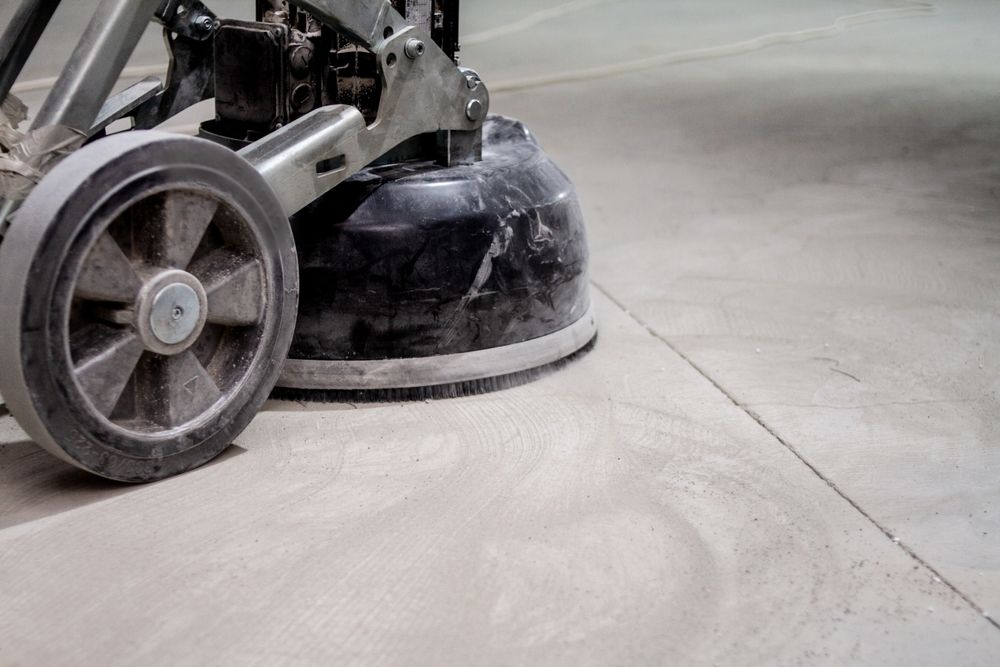
Coating failures usually trace back to inadequate surface preparation rather than product defects. Diamond grinding mechanically removes the weak surface layer and creates the profile needed for coating adhesion, while shot blasting opens the concrete's pore structure by impacting it with steel shot at high velocity. Resin Flow Co prepares concrete surfaces using the method that matches the slab condition and the coating system being applied, addressing contamination, smoothness variations, and structural defects before any resin touches the floor.
This process also includes crack repair to prevent those fissures from telegraphing through the new coating and continuing to widen. Moisture mitigation becomes necessary when testing reveals vapor transmission rates that exceed the coating manufacturer's specifications. Floor leveling services address dips, ridges, or lippage that would remain visible under thin coatings or cause pooling issues.
Request a substrate evaluation to identify which preparation methods your slab requires based on its current condition and contamination level.
Why Surface Profiling Works for Adhesion
Shot blasting creates a rougher profile than diamond grinding and is more effective on contaminated concrete where oils or sealers have penetrated deeply. The impact energy fractures the surface and ejects contaminated material, leaving clean concrete exposed. Diamond grinding produces a smoother, more uniform profile suitable for thin-film coatings and polishing applications where excessive roughness would show through the finish.
After preparation, you'll see the concrete has changed from a smooth, glossy surface to a matte texture that feels slightly rough to the touch. This texture is the mechanical "tooth" that allows coatings to grip the slab rather than sitting on top as a film. Properly prepared concrete also absorbs water evenly across the surface rather than shedding it in some areas and soaking it up in others, indicating consistent porosity.
Moisture mitigation typically involves applying a vapor barrier coating system or installing a moisture-tolerant primer before the main coating. Skipping this step on slabs with high vapor emission leads to bubbling, blistering, or complete delamination as water vapor pushes upward through the coating. Testing concrete moisture before preparation prevents costly removal and reinstallation later.
What Property Owners Usually Ask
Preparation work determines whether a coating system lasts years or fails within months, so understanding what's required for your specific slab matters before installation begins.
What indicates whether a slab needs shot blasting instead of diamond grinding?
Heavy oil contamination, thick existing coatings, or smooth troweled finishes that won't profile adequately with grinding alone typically require shot blasting. The process is louder and generates more dust than grinding, but it removes contamination that grinding would only smear across the surface.
How are cracks repaired to prevent them from reopening?
Narrow cracks get routed wider to create a reservoir for flexible epoxy or polyurea fillers that can accommodate minor movement. Wide cracks or those showing signs of ongoing settlement may require structural repair with rigid epoxy and mechanical reinforcement like staples or rebar dowels.
When does moisture mitigation become necessary in Los Angeles facilities?
Slabs on grade without vapor barriers, areas with poor drainage outside the building, or spaces with plumbing leaks often show elevated moisture levels. Testing with calcium chloride kits or relative humidity probes reveals whether vapor transmission exceeds acceptable limits for the coating being installed.
What's involved in floor leveling before coating application?
Self-leveling cementitious compounds fill low spots and smooth out surface irregularities, creating a flat plane for the coating. The leveler must be compatible with both the existing concrete and the coating system, and it needs adequate cure time before coating can begin.
How does surface profile depth affect coating performance?
Too little profile and the coating won't develop adequate bond strength; too much profile and thin coatings won't fill the valleys, leaving a rough finished surface. Each coating type specifies an ideal profile range measured by standardized comparator chips.
Resin Flow Co tests concrete for moisture, hardness, and contamination before selecting preparation equipment and methods, since mismatched approaches waste time and fail to produce the surface conditions coatings require. Arrange a site visit to evaluate your slab and determine which combination of grinding, blasting, crack repair, and moisture mitigation will provide a suitable substrate for your chosen floor system.
Financing Available
Make Your Flooring Project Affordable
Resin Flow Co delivers high-quality, durable, and stylish resin flooring solutions for residential, commercial, and industrial spaces. With a focus on craftsmanship, customer satisfaction, and innovative design, we bring flooring visions to life—seamlessly and affordably. Get in touch today for a free quote or consultation.