Protection Built for Decades of Chemical Exposure
Industrial Floor Coatings in Los Angeles for manufacturing facilities, aircraft hangars, and automotive service centers that face heavy-duty abrasion and chemical spills
Aircraft hangars and automotive service centers expose floors to hydraulic fluid, battery acid, solvents, and the concentrated weight of wheeled equipment that would destroy residential-grade coatings within weeks. Resin Flow Co installs heavy-duty protective coatings formulated with chemical and abrasion resistance that matches the specific exposure conditions in each facility. These systems use thicker resin layers, harder aggregate additives, and chemical-resistant topcoats designed to handle the operational demands of manufacturing and maintenance environments.
The coating process involves applying multiple layers with different functions: a penetrating primer that grips the concrete, a body coat that provides thickness and impact resistance, and a topcoat selected for its resistance to the chemicals and traffic the floor will encounter. Material selection depends on whether the floor sees mostly petroleum products, acidic cleaners, alkaline degreasers, or a combination of contaminants.
Schedule a facility assessment to identify which chemicals contact your floors and determine the coating chemistry that provides adequate resistance.
What Heavy-Duty Installation Actually Accomplishes
Chemical resistance is achieved by selecting resin systems with molecular structures that don't degrade when exposed to specific solvents or corrosive liquids. Epoxy systems handle most petroleum products and alkaline chemicals, while polyurethane or polyaspartic topcoats resist UV yellowing and provide flexibility that prevents cracking under thermal cycling. Some aggressive acids require specialty novolac epoxy formulations that cost more but remain intact where standard epoxies would soften or discolor.
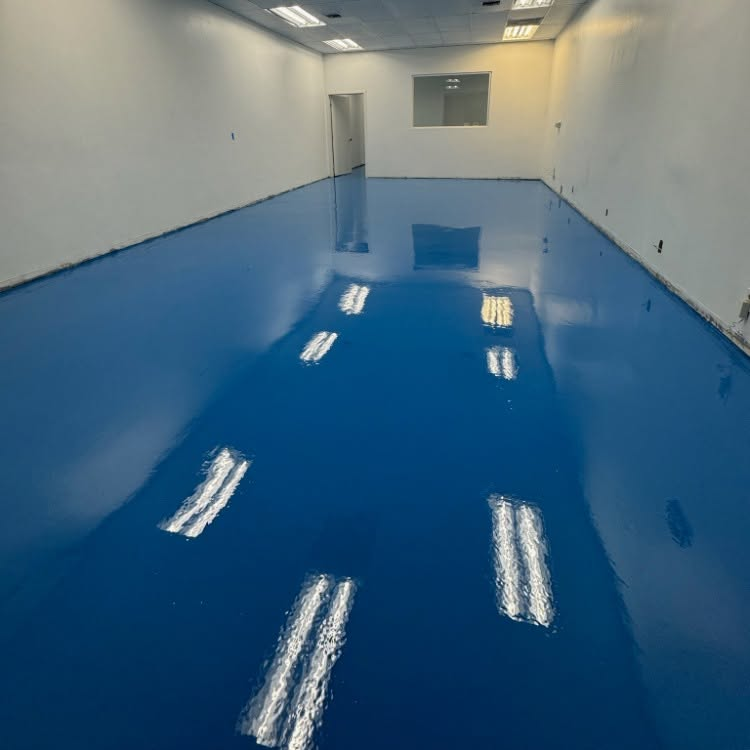
After installation, you'll notice spilled hydraulic fluid or dropped solvents no longer leave permanent stains or soft spots where the concrete has been attacked. The floor maintains traction even when contaminated with oil or coolant, reducing slip hazards in service areas. Abrasion from metal shavings, dropped tools, or dragged equipment doesn't wear through to bare concrete in traffic lanes, so the coating continues protecting the slab underneath rather than requiring patching and touch-up every few months.
Automotive service centers and manufacturing facilities often require rapid return to service, which drives topcoat selection toward fast-cure chemistries like polyaspartics that harden overnight instead of multi-day epoxy cure schedules. This decision involves trade-offs, since faster cure times usually mean shorter application windows and less working time to achieve smooth finishes. Matching cure speed to your operational schedule prevents extended downtime while still allowing proper installation.
Questions Before Starting Your Project
Industrial environments present coating challenges that don't exist in residential or light commercial applications, and selecting the wrong system leads to premature failure under operational loads.
What differentiates industrial coatings from standard garage floor products?
Industrial systems use higher solids content, thicker application rates, and chemical-resistant resins formulated for continuous exposure rather than occasional spills. They also incorporate harder aggregates and UV-stable topcoats that maintain properties under the lighting and environmental conditions found in working facilities.
How do you determine which chemicals the coating must resist?
A survey of all fluids, cleaners, and process chemicals that contact the floor creates a list for resin selection. Manufacturers provide chemical resistance charts showing how each resin performs against specific substances, allowing material selection based on actual exposure rather than general assumptions.
When should aggregate be added to the coating for slip resistance?
Any area where liquids are routinely present or where workers operate on inclined surfaces benefits from broadcast aggregate or textured topcoats. The aggregate size and broadcast rate control traction level, with heavier broadcast densities providing more grip but making the surface harder to sweep and clean.
What preparation do industrial floors require beyond standard cleaning?
Manufacturing facilities often have embedded metal shavings, ground-in oils, or previous coating layers that require shot blasting or scarification to remove completely. Inadequate removal leaves contamination that prevents the new coating from bonding, regardless of the resin quality or application technique.
How does temperature affect industrial coating installation in Los Angeles?
Many industrial spaces lack climate control, so application must account for concrete temperature, which affects cure speed and bond development. Summer installations may require early morning application to avoid excessive heat, while winter work might need supplemental heating to maintain minimum cure temperatures.
Resin Flow Co matches coating chemistry to your facility's specific exposure profile after reviewing operational conditions, chemical inventories, and traffic patterns. Contact us to discuss material options for aircraft hangars, automotive service centers, or manufacturing floors where standard coatings don't provide adequate protection.
Financing Available
Make Your Flooring Project Affordable
Resin Flow Co delivers high-quality, durable, and stylish resin flooring solutions for residential, commercial, and industrial spaces. With a focus on craftsmanship, customer satisfaction, and innovative design, we bring flooring visions to life—seamlessly and affordably. Get in touch today for a free quote or consultation.