Floors That Look Like Polished Stone & Liquid Glass
Metallic Epoxy Flooring in Los Angeles for residential and commercial spaces seeking unique, high-gloss decorative surfaces
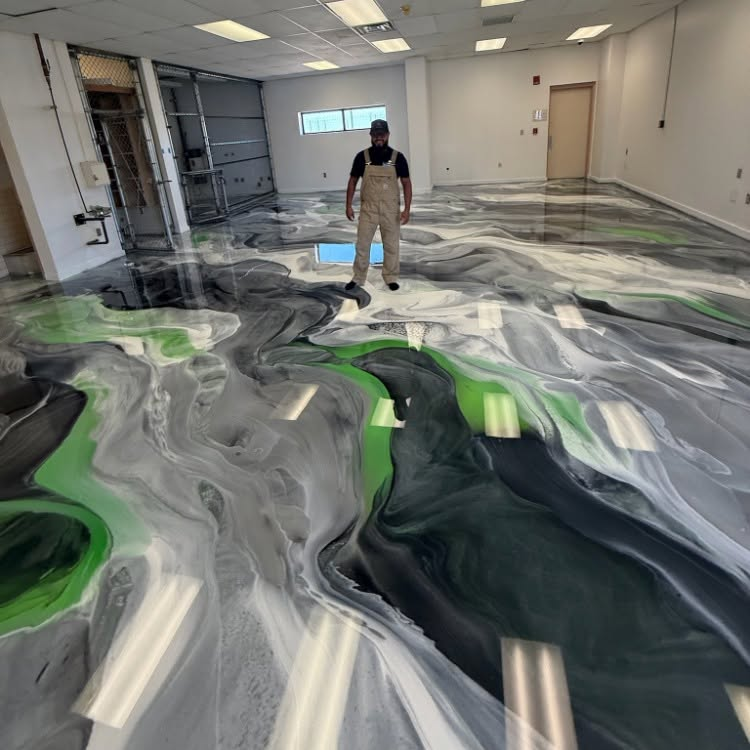
Resin Flow Co specializes in hyper-reflective mirror-finish metallic pours and modern interior resin transformations. A high-end marbleized floor effect happens when specialized metallic pigments suspended in clear epoxy resin swirl and settle during application, creating dramatic 3D depth effects that mimic natural stone, onyx, or flowing water.
Utilizing specialized marbleized swirl techniques, our installers manipulate wet material using rollers, brushes, blowers, and solvent drops to influence pigment distribution. No two metallic floors look identical—making your floor a one-of-a-kind architectural focal point.
What Changes After the Metallic System Cures
The metallic layer is sealed with a clear topcoat that adds UV protection and durability, which also determines the final gloss level—most metallic floors use high-gloss topcoats to maximize the reflective, three-dimensional appearance. Los Angeles properties with ample natural light benefit from metallic floors because the shifting light throughout the day changes how the metallic particles reflect and appear, creating a dynamic surface that looks different from various angles. Residential applications often include living rooms, basements, and home showrooms, while commercial installations appear in boutique retail stores, upscale restaurants, and corporate lobbies where visual impact matters.
Once cured, the floor develops a depth similar to looking into clear water—the metallic pigments appear suspended at different levels within the coating, and the glossy topcoat creates reflections that interact with the metallic shimmer underneath. The surface performs like any epoxy floor in terms of durability and stain resistance, but the visual complexity makes wear patterns and scratches less noticeable than on solid-color floors. Cleaning is straightforward because the smooth, sealed surface repels dirt and liquids, though high-gloss finishes show dust and footprints more readily than matte surfaces.
Custom metallic finishes cost more than standard epoxy because the application is labor-intensive and requires expertise to manipulate the material into the desired pattern, and because metallic pigments themselves are more expensive than standard color additives. The finished appearance depends on installer technique, so seeing examples of previous work and sample boards helps set expectations. Metallic floors work best on smooth, level substrates because surface irregularities become more visible under the reflective, translucent coating.
Answers to Frequent Service Questions
Clients considering metallic epoxy want to understand what controls the final appearance and how these floors perform over time.
What creates the swirling, marble-like patterns in metallic epoxy?
The installer manipulates the wet epoxy using specialized rollers, squeegees, or air pressure to move the metallic pigments through the clear resin, creating organic patterns that develop as the material flows and settles before curing.
How do you choose color combinations for a metallic floor?
Sample boards showing different metallic pigment blends and application techniques help visualize options, and many clients bring photos of stone or design elements they want to complement in their Los Angeles property.
Why do metallic floors cost more than standard epoxy coatings?
The metallic pigments are more expensive than standard color additives, the application process takes longer because the installer manually creates the pattern, and the clear topcoat used to seal metallic floors typically requires multiple coats to achieve proper depth and protection.
What kind of maintenance does a metallic epoxy floor require?
Regular dust mopping or vacuuming removes abrasive dirt, and occasional damp mopping with pH-neutral cleaner maintains the high-gloss finish, while avoiding harsh chemicals or abrasive scrubbing that could dull the topcoat over time.
How does natural light affect the appearance of metallic flooring?
Sunlight and changing light angles throughout the day cause the metallic particles to reflect differently, creating a shifting, dynamic appearance that makes the floor look different in morning versus afternoon light.
Resin Flow Co creates custom metallic epoxy floors for residential and commercial clients across Los Angeles, working with designers and property owners to develop color schemes and patterns that complement the surrounding space. Schedule a design consultation to review metallic options and view samples of completed installations.
Financing Available
Make Your Flooring Project Affordable
Resin Flow Co delivers high-quality, durable, and stylish resin flooring solutions for residential, commercial, and industrial spaces. With a focus on craftsmanship, customer satisfaction, and innovative design, we bring flooring visions to life—seamlessly and affordably. Get in touch today for a free quote or consultation.
Applications & Named Use Cases
High-Impact Applications for Metallic Resin
Whether transforming an interior living area or elevating a brand showroom, metallic epoxy adapts to any space requiring both high aesthetic value and heavy-duty durability:
- Residential Living Spaces: Upgrade living rooms, basements, kitchens, and master suites with seamless, luxury resin surfaces that reflect ambient lighting and elevate modern interior design.
- Commercial Showrooms & Retail: Make a lasting impression in retail boutiques, auto showrooms, art galleries, and corporate lobbies with bold, high-gloss visual depth that draws customer attention.
- High-End Garages & Man Caves: Transform plain concrete garages into sleek, showroom-quality spaces that withstand vehicle traffic, chemical spills, and tire marks while maintaining a mirror-finish shine.
📸 Before & After Callout: See how we turned a pitted, dull residential garage into a seamless copper-and-charcoal 3D metallic masterpiece. View Before & After Gallery